





















Australia’s “Red Centre” Turns Green
Abundant rainfall in February and March 2026 transformed the desert landscape of Central Australia.

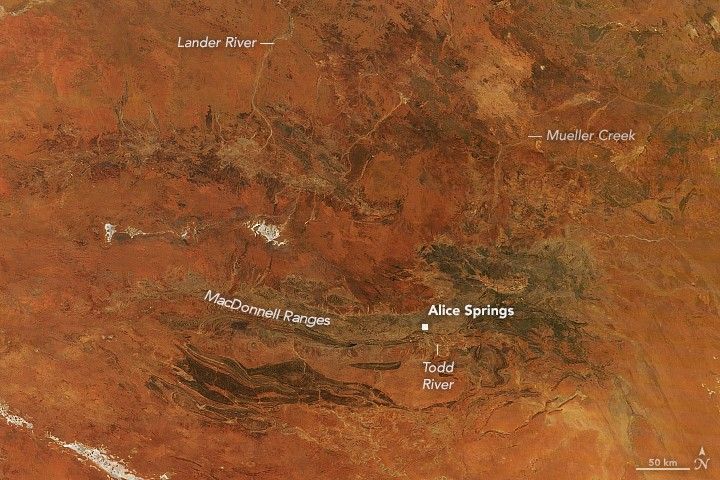
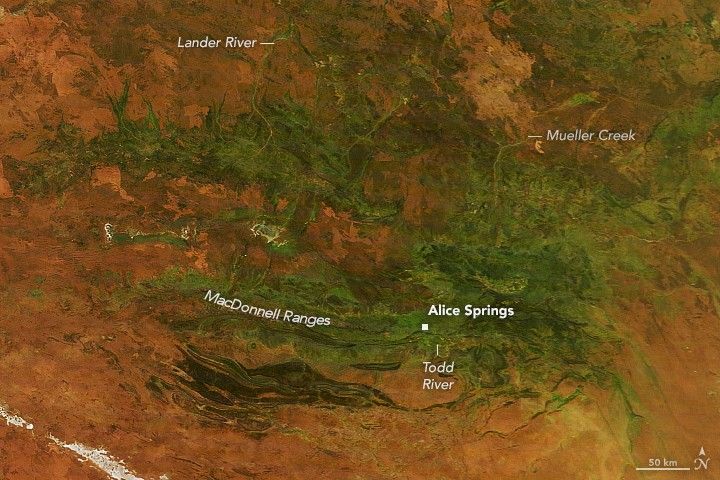


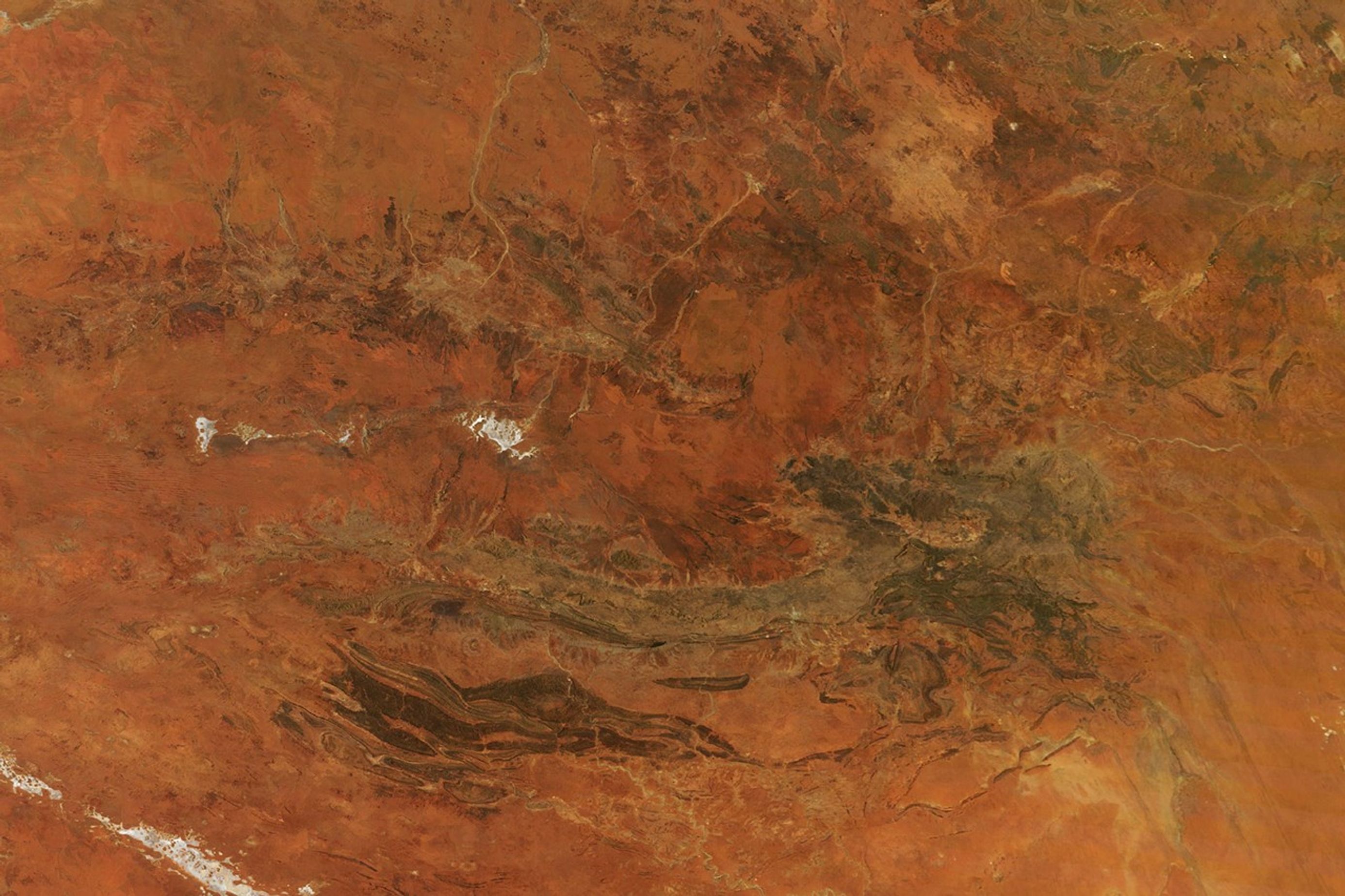
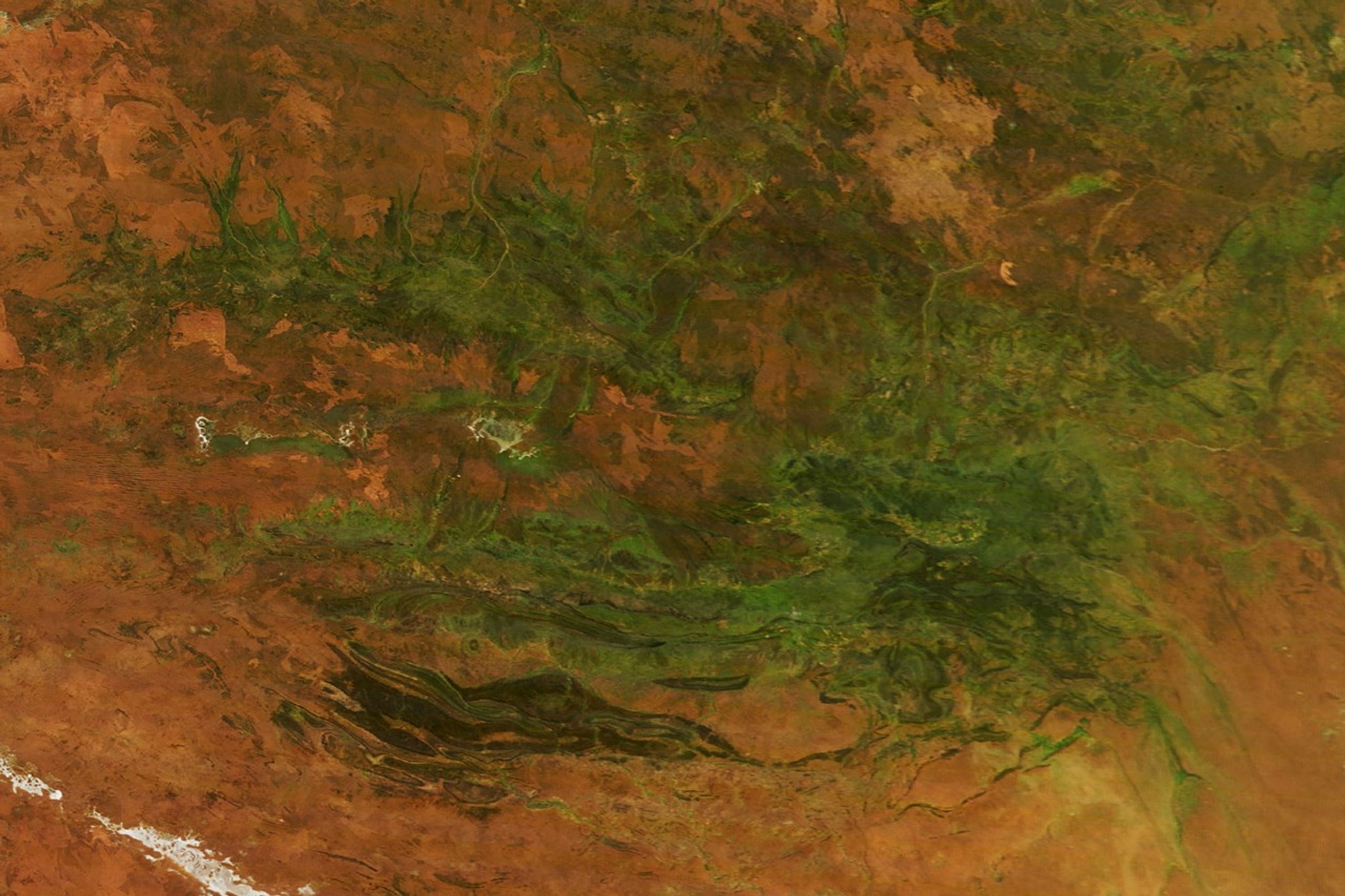
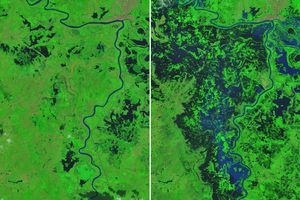
The town of Alice Springs lies near Australia’s geographic center, in a region often called the “Red Centre” for the rusty hue of its desert landscape. After weeks of heavy rainfall in February and March 2026, however, vast areas of desert and surrounding mountains turned lush and green.
The MODIS (Moderate Resolution Imaging Spectroradiometer) on NASA’s Terra satellite captured this image (right) of the southern part of Australia’s Northern Territory on March 10, 2026. For comparison, the left image shows the same area in January 2026, before the onset of heavy rains.
The area’s landscape typically appears red due to the oxidation of iron-rich rock. During periods of sufficient rainfall, water begins to flow in previously dry riverbeds, and dormant vegetation springs to life. February 2026 brought more than enough water to the Northern Territory for the transformation to occur—an area average of 239 millimeters (9 inches)—marking the territory’s third-wettest February on a record that dates back to 1900, according to the Bureau of Meteorology.
Beyond the transformation visible from above, the rainfall also caused disruptions on the ground. Thunderstorms earlier in the month produced enough rain to cause water levels on the Todd River and other area rivers to quickly rise, while flash flooding in Alice Springs uprooted trees and left some people stranded, according to news reports. Later in the month, heavy rains returned as another tropical low stalled over central Australia for nearly a week, causing flooding that prompted officials to declare a natural disaster.
As of late March, more extreme weather was on the way for Australia with the approach of Tropical Cyclone Narelle. Bureau of Meteorology forecasts called for severe storm impacts to reach northern Queensland by late on March 19 or March 20. Flooding watches and warnings also extended inland, including to Alice Springs, where past storms have already saturated river catchments.
NASA Earth Observatory image by Lauren Dauphin, using MODIS data from NASA EOSDIS LANCE and GIBS/Worldview. Story by Kathryn Hansen.
References & Resources
- Australian Broadcasting Corporation (2026, February 26) In photos: Extreme weather sweeps across large parts of Australia. Accessed March 18, 2026.
- Australian Broadcasting Corporation (2026, February 12) Cars submerged, trees torn down, roads inundated: Alice Springs flooding in pictures. Accessed March 18, 2026.
- The Conversation (2026, February 22) Severe flooding – in central Australia? How a vast humid air mass could soak the desert. Accessed March 18, 2026.
- Bureau of Meteorology (2026, March 2) Northern Territory in February 2026. Accessed March 18, 2026.
- Bureau of Meteorology via Facebook (2026, March 15) On rare occasions when the outback gets drenched with rain, dormant plants spring to life. Accessed March 18, 2026.
- The Watchers (2026, February 27) Desert rainfall anomaly triggers major flooding across central Australia. Accessed March 18, 2026.
You may also be interested in:
Stay up-to-date with the latest content from NASA as we explore the universe and discover more about our home planet.
A potent atmospheric river delivered intense rainfall to western Washington, triggering flooding and mudslides.
January brought blistering extremes Down Under as record temperatures scorched the nation’s southeast.
Villages and farmland were swamped after unusually heavy early-February rains pushed the Sinú River over its banks.




What's Your Reaction?