

























Norcross debates demolition moratorium ahead of Aug. 10 vote
During an August 3 policy work session, the Norcross City Council discussed the 2027 budget, a proposed flat property tax rate, and a potential moratorium on the demolition of pre-1950 structures. The post Norcross debates demolition moratorium ahead of Aug. 10 vote appeared first on Rough Draft Atlanta.

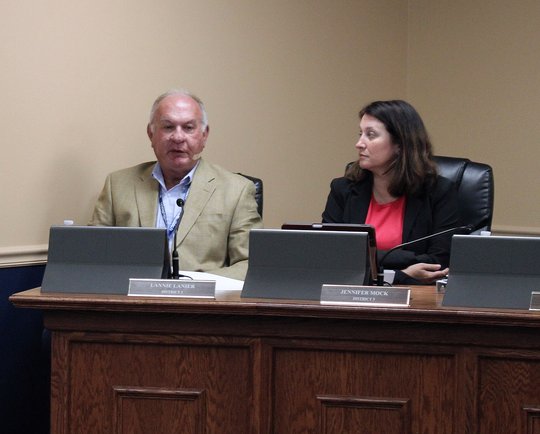
The Norcross City Council met for an Aug. 3 policy work session to discuss the 2027 budget, this fall’s property tax rate, and a moratorium on the demolition of pre-1950 structures.
Elected officials spent time discussing whether a temporary block on all historic demolitions is necessary and pushing back on code and zoning map changes, including the removal of most downtown parking minimums.

Blocking historic demolitions
Council Member Matt Myers said he opposes the moratorium on the demolition of pre-1950 structures because it’s a “blunt force tool” and a “blanket no.”
“Our current process is to review each individual plan and make a decision,” Myers said. “This moratorium only says, ‘we don’t want to review those applications.”
Myers said council members already vote on demolition permits for historic structures.
“I just hate moratoriums when we already have policy in place to handle it … and process,” Myers said. “Why would we, without review, put a moratorium in place and impose that until February 2027?”
Council members in favor of the moratorium ordinance floated the idea of shortening the prohibition from six months to eight weeks.
Because city officials moved their July policy work session to Aug. 3 and rescheduled the regular meeting for Aug. 10, council members did not vote. The moratorium is set for an Aug. 10 vote.
Council Member Andrew Hixson said he wants to understand the issue of historic preservation in Norcross before having any proposed demolitions come for a vote. He said the moratorium is not a solution, advocating more clarity in the city’s policy.
“I voted to tear down every historic home except for one in the city, so I’m as guilty as anyone,” Hixson said. “Apparently, I’ve been doing that under a true lack of knowledge.”
Elected officials agreed to continue debating specifics around the downtown entertainment and parking districts at the next policy work session, rescheduled for Aug. 24.
Budget and taxes
The city’s budget for fiscal year 2027, running from Sept. 1 through Aug. 31, totals about $62.7 million across all funds, including Norcross Power, solid waste, stormwater, special revenue, and capital projects. The general fund, which supports many of the city’s day-to-day services, totals approximately $23.6 million, up 4.7% from last year.
Norcross Finance Director Jon Robinson said the city is proposing to keep the property tax rate flat at 6.249 mills. One mill is $1 per $1,000 of a home’s taxable value, which is 40 percent of the property’s overall assessed value.
Robinson said public hearings are not required because the city’s proposal does not exceed the rollback rate, calculated using the latest digest numbers from the Gwinnett County Tax Assessors’ Office. The rollback millage rate must “produce the same total revenue on the current year’s new digest that last year’s millage rate would have produced had no reassessments occurred,” according to the state Department of Revenue’s website.
The city’s new homestead exemptions, which took effect this year after voters approved them in November 2025, are $45,000 for homeowners under 65 and $90,000 for homeowners 65 and older. Meanwhile, the city’s solid waste collection fee is increasing 4.7% to match contract inflation.
Council members asked staff about electric fund transfers and year-over-year comparisons on capital project spending. Elected officials also agreed to lower the employee salary increases from 5% to 3.5%.
The city’s proposed 2027 budget, with its first public hearing scheduled for Aug. 10, has the same estimated revenue from property taxes as last year’s spending plan.
Downtown parking, open container
Despite other disagreements, elected officials encouraged staff to adjust maps of the downtown parking and open-container districts to shift away from the Buford Highway corridor.
According to a city memo, the Norcross Planning Commission voted unanimously to recommend the proposed code and zoning map.

Council members Bare and Myers expressed concerns about the ordinance’s 5,000-square-foot minimum on additional parking spaces. For businesses like restaurants, grocery and home goods retailers, and pet care, “no off-street parking spaces shall be required for any building, use, or site with less than 2,500 square feet,” according to a city memo.
Bare said some stalled downtown projects, like South End, would have their required number of parking spaces cut by more than 50% with the new ordinance.
Elected officials debated the ordinance’s minimum square footage, millions of tax dollars spent on downtown parking, and investing in other parts of the city.
Council Member Bruce Gaynor said the idea is to encourage businesses to relocate to downtown Norcross without city-mandated parking minimums driving up costs or discouraging projects.
“We want to make sure that parking is not the impediment,” Gaynor said. “Businesses go where they need to go.”
The post Norcross debates demolition moratorium ahead of Aug. 10 vote appeared first on Rough Draft Atlanta.
What's Your Reaction?